


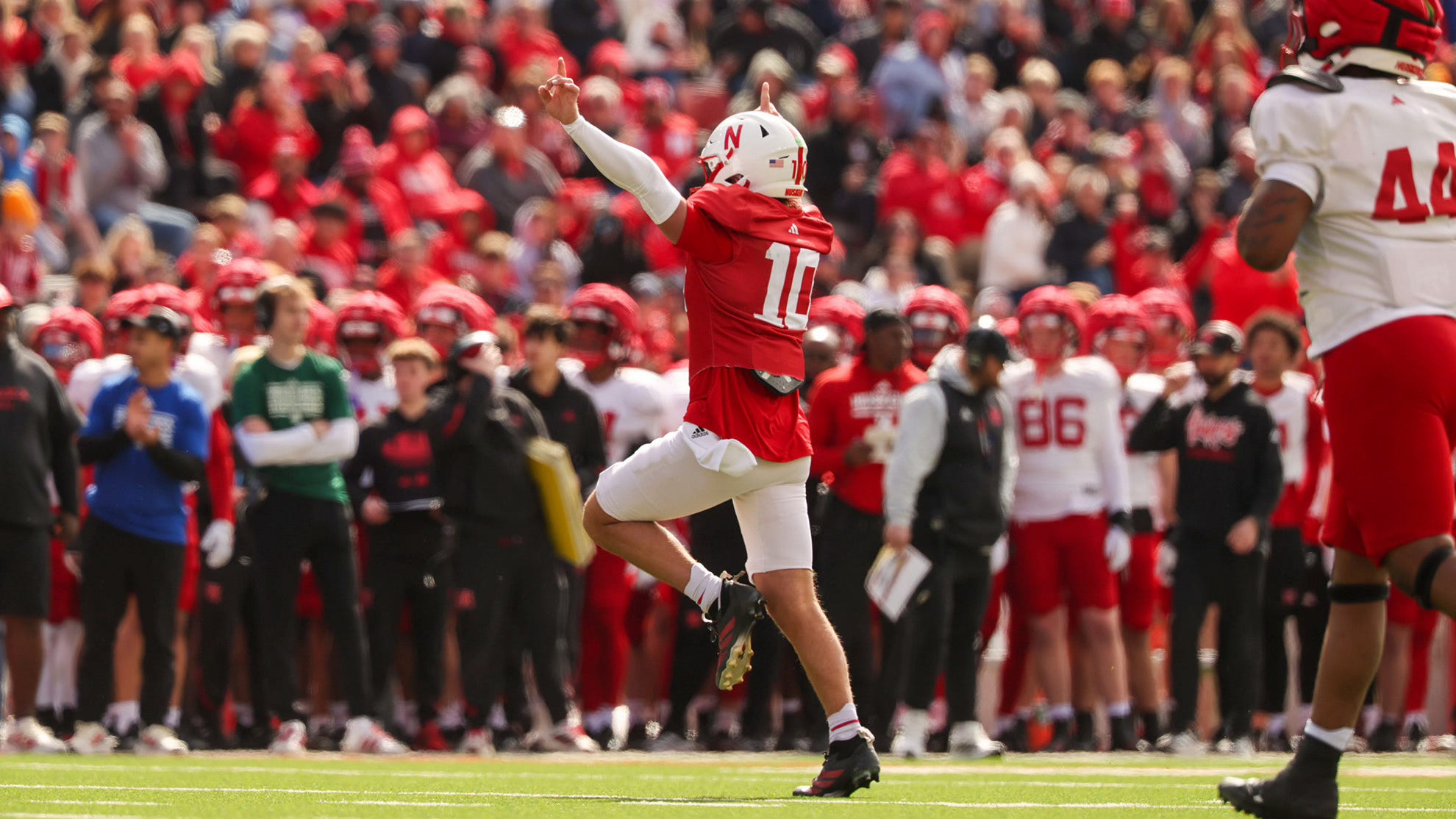
Welcome to Wild Theory Thursday. It is not a recurring event1 nor a preexisting series. It’s just Thursday and I have a theory about Nebraska football success in 2026. If it becomes a thing, you’ll have been here at the inception, like an …
Here’s the theory: Thanks to three of the Huskers’ highest-profile additions this offseason, I think Nebraska has a chance to be very good on first down this season. I don’t think this theory has been forwarded anywhere else because, well, it’s esoteric. Nobody else was looking for it. And I’m now going to pitch you on the value of something a) few knew existed, and b) even fewer knew they needed.
Why does first down matter? It’s the most common down in football. You don’t have any other downs without having first down first. That’s the obvious reason. By default, if a team is “winning” first down it is winning most of a football game.
The less obvious reason is because we’re in a defensive renaissance in the college game. Possessions are down. Explosive plays are down. Meanwhile, points per possession aren’t down significantly and plays per possession are up.
Essentially, teams are having to put together longer, more efficient drives to produce points. Explosive plays used to be an effective cheat code for avoiding this, and they still work. They’re just less common—down almost a full percentage point—than they were five years ago.
This makes first downs incrementally more valuable, both as the most common down and also as the one that can deliver an advantage for what comes next. Three key players, all new, make first-down improvement possible for the 2026 Huskers, maybe even probable.
Before we get to the key players2 it should be noted that Nebraska wasn’t bad on first down a year ago. The offense averaged 6.13 yards per play (52nd), and the defense allowed 5.29 (39th). That 0.83 yard differential ranked 36th, ahead of playoff teams Georgia and Tulane.
