


Curt Cignetti had it easier at Indiana than Bob Devaney did when he took over Nebraska in 1962.
There, I wrote it. Not sure I buy it, but there’s at least one piece of admissible evidence that could make it into court.
Cignetti’s two-year run with the Hoosiers doesn’t need a sales pitch, but it came with one built in—a national title at the school that was once the losingest major program of all time. Just had to, y’know, win the games, and then it sold itself. It’s tough to resist, though I always have a moment’s hesitation of “what does 1957 Indiana have to do with 2025?”
But even if you limit the look-back period to 20 years, Indiana’s rise under Cignetti is hardly diminished. The Hoosiers ranked 111th nationally with a .378 winning percentage pre-Cignetti. It’s still a massive leap.
At Nebraska, memory calcifies at the opposite end. The Huskers are still one of the 10 winningest programs all time. For those of us who weren’t around to remember Devaney’s arrival in 1962, it’s easy to believe that Nebraska was always near the top of the college football heap. You don’t get to the top 10 all time without consistent periods of success, and NU had those pre-Devaney, but it wasn’t anything close to the 60 years that were to follow. When Devaney arrived, Nebraska’s all-time winning percentage (.615) ranked 39th. Not bad, but behind such schools as Syracuse, Arizona, Wisconsin and Stanford.
The 20 years prior to 1962, however, were a particularly dark time in Lincoln. Nebraska won just 36.4% of its games between 1942 and 1961, 122nd nationally.
And thus, your honor, it’s plain to see that the 20-year Nebraska Bob Devaney inherited was ever so slightly worse than the 20-year Indiana Curt Cignetti inherited. No need for opposing arguments. Bang the gavel now, please.
What is the relevant look-back period when trying to assess a coach? There’s probably not a definite answer and if there is, I definitely don’t have it. But I was thinking in 20-year chunks after reading how Bill Connelly calculates his coaching effect measure using his SP+ ratings:
The coach rating is derived 60% from a team’s performance against that 20-year baseline (so, if your SP+ rating is 10.0 in a given season, and your school’s 20-year average rating was 5.0, that’s a +5.0) and 40% from the raw SP+ rating. As you might expect, Indiana’s performance in 2025 nearly broke the scale.
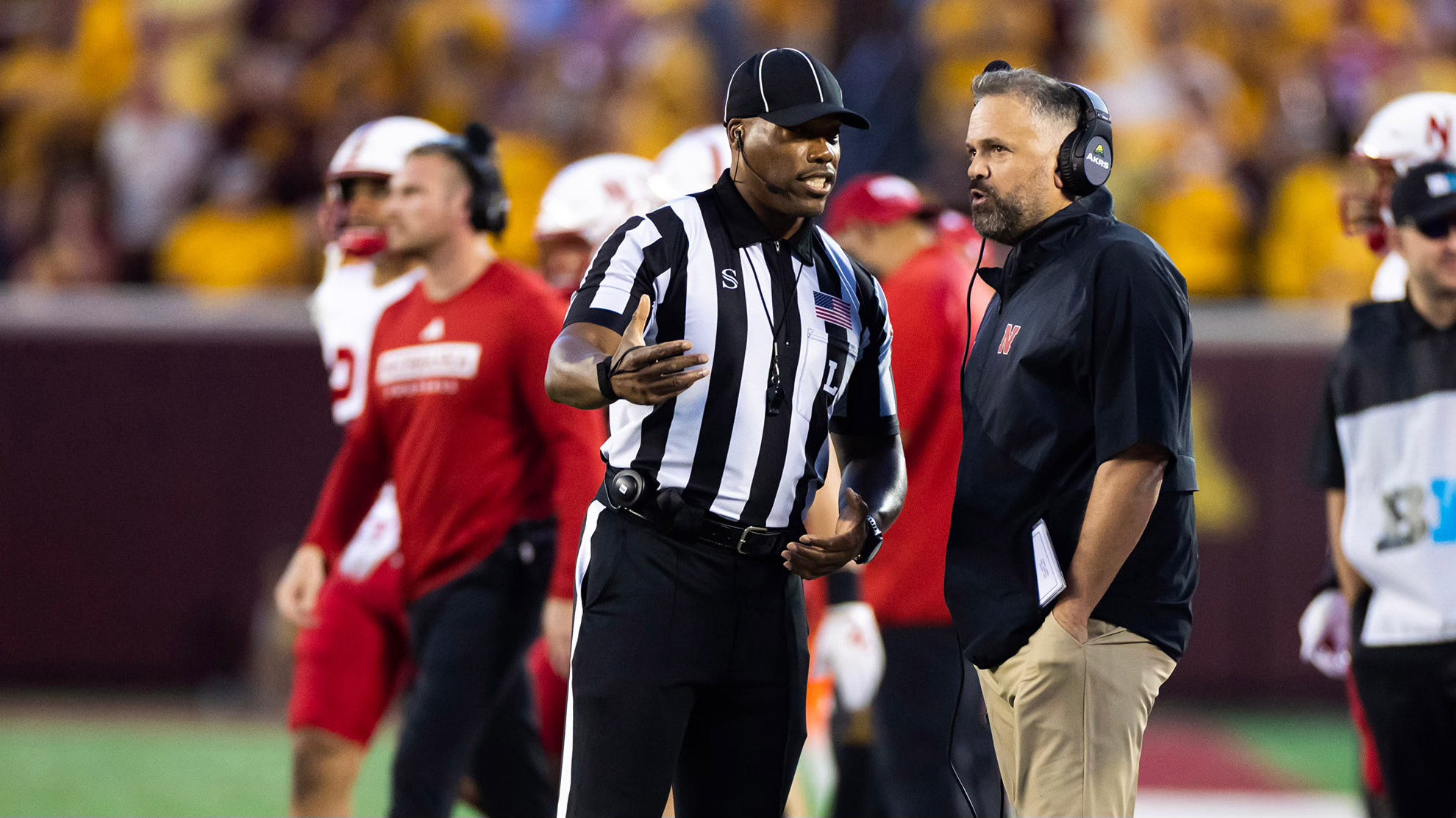
Yes, there’s no getting around how quickly1 Cignetti took Indiana to these heights, but my real interest in this method was in what it might help frame about Matt Rhule’s first three seasons in Lincoln. How do they compare to all of his post-Osborne successors at the same stage in their tenures.
I used the same 20-year baseline for degree of difficulty but took each coach’s SP+ average after three seasons as the performance part of the equation. Do that, and it looks like this:
There’s probably not much there that surprises anyone who has followed the Huskers’ descent post-Osborne, but I think the numbers offer a lot of context about the past 25-ish years of the program. Too much, in fact, unless I want this to be a 2,000-word newsletter.
I do not, so I’ll just stick to three takeaways about Rhule’s first three seasons.
The Good: Technically you can say with some backing that Rhule is the third-best coach NU has had after his first three seasons in the post-Osborne era. A little less tongue in cheek: Rhule is the first NU coach of that period to improve Nebraska’s SP+ rating in each of his first three seasons. If you’re seeking some “it’s just a slow build” evidence, there is some.
The Bad: It’s still a negative coaching effect, which I think is the nagging feeling many Huskers have this offseason. There’s no doubt Nebraska is a better team in a better place than where it was after 2022, but the highs just haven’t been high enough to really differentiate this tenure yet from most of the others that preceded it. This is a bit surprising given that in Connelly’s 2025 ratings of the best active FBS coaches (minimum 4 seasons) Rhule came in 30th with a career effect of 4.7.

The Unfeeling: Part of the reason for using a model such as this2 is to get out of the weeds, away from some details that might take on too much weight due to recency. I don’t think we see that risk in the table. What we see is a program slipping from its previous heights, reflected by the declining 20-year average, and a series of coaches who never quite caught up even though the defined baseline3 was declining.
But I also feel like it’s almost impossible to overrate recency in college football right now. Game days look and feel the same, but does anything else?
In Rhule’s case, the 20-year look-back is from the last year of Solich (2003) to the last year of Frost (2022). That’s his baseline for this calculation and that span includes some pretty good seasons. Seasons his Huskers haven’t had yet.
But because of the upheaval of the sport in the last five years, I wondered what happened if a 10-year baseline was used for comparison. That made a few changes to the list. Nothing major, but of note:
Pelini (9.5) edges out Solich (9.3) for best coach effect after three seasons. The context for the two coaches was completely different, but I will say this better matches how I felt about both tenures at that point.
Callahan (-6.3) and Frost (-3.3) look about the same—i.e., not good—but Riley (-1.1) looks a bit better by being compared only against Callahan and Pelini. It’s still not good.
Rhule with a 10-year baseline comes closer to zero at -0.4, Against an inherited expectation of being 7 points better than the average FBS team, his teams have been 4 points better on average, and that’s probably closer to how I feel about this era entering Year 4. The decade prior to 2023 feels like a more relevant comparison than the two decades prior, but it’s certainly debatable. Pick whatever sample you think feels right.
But before you do, consider this: In the decade prior to Cignetti at Indiana the Hoosiers had a .412 winning percentage (103rd). That’s still better than what Devaney arrived to at a program with a .391 winning percentage (111th) over the prior decade.
At the very least we’ve established today that Cignetti is guilty of Devaney erasure. Not sure what sort of sentence that carries.
It took Devaney eight years to get there, but that was without the transfer portal. He would’ve killed in the transfer portal.
Or any model, really.
I’m not sure the actual baseline—basically, fan expectation—has declined as much as the numbers here.
-2.5 for Rhule doesn't feel right at all to me. But -0.4 is perfect for a coach who has managed to improve the team every year without it actually feeling like improvement
Agree with your opening statement.