


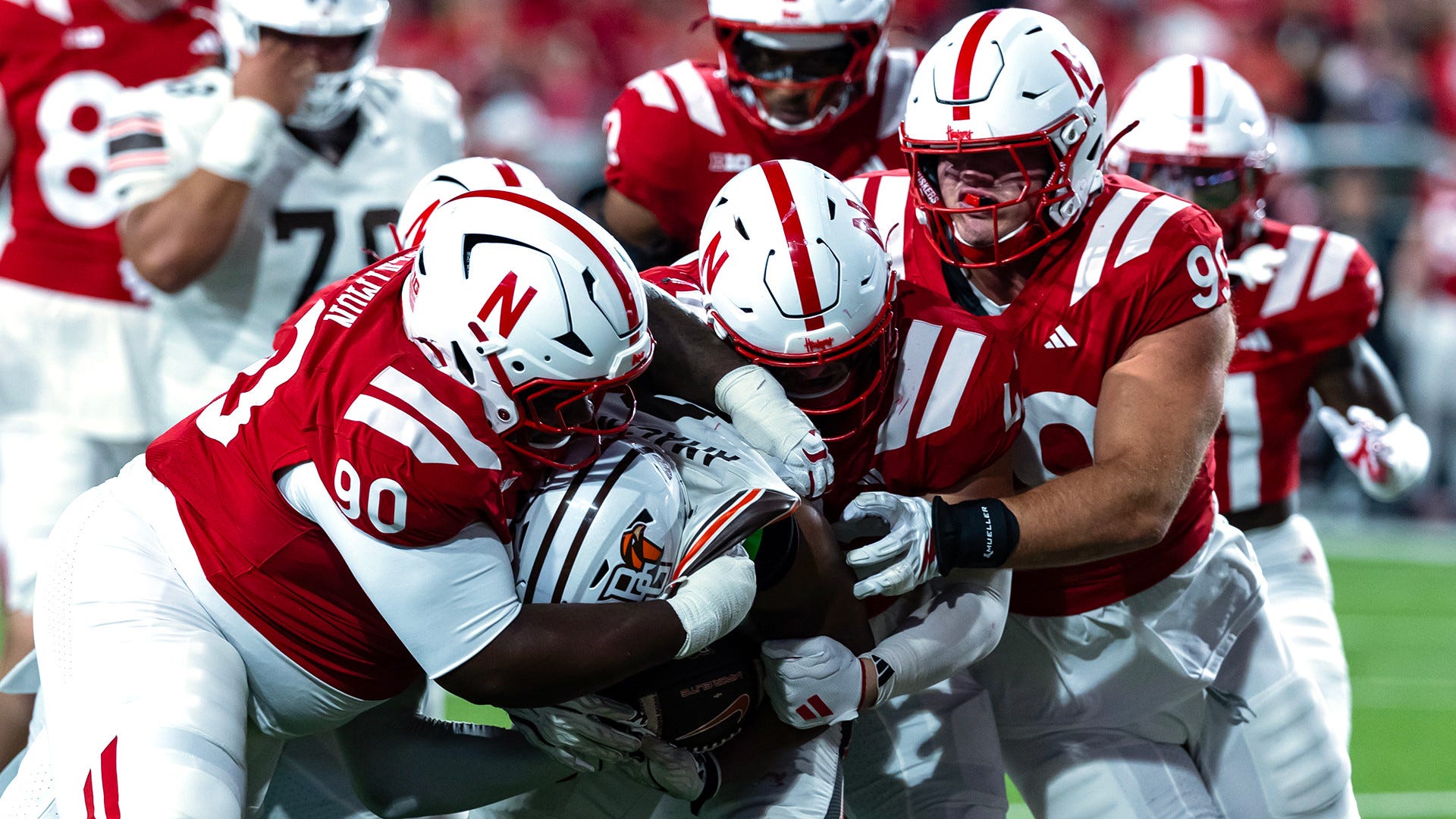
Twenty percent of Nebraska’s past 15 games, dating to the start of last season, have been against MAC schools. The Huskers have outscored those schools 173-28. Against 11 power-conference opponents over that span, Nebraska is 67 points in the hole, being outscored 246-313.
So, I get it if Saturday’s 56-7 win over Bowling Green doesn’t move the needle much beyond the enjoyment it provided in real time. Nebraska detonated Akron last year, ran away from Ohio to start this season and then looked even better this week against the Falcons.
The past tells us games like this—NU ended up being a 30-point favorite Saturday—don’t mean much. The present makes me wonder if the old ways still apply.
College football seemed to be coughing up a new strain of chaos this weekend. Some highlights:
Oregon lost as a 24-point favorite on the road at Oklahoma State, which lost to Tulsa1 a week ago. It was the Ducks’ first loss to an unranked team since 2021.
Michigan, dropped from the top 25 and left by the side of the road after being thoroughly outplayed in a win over Western Michigan in Week 1, beat No. 11 Oklahoma.
Oregon State, left behind by the old Pac-12, had a lead over big spendin’ Texas Tech with 7 minutes remaining before the Red Raiders, a 25-point favorite, scored twice for an 11-point win.
Through two weeks this season, three underdogs of 20-plus points have won outright. That happened five times in all of 2025 and five more times the season before that.
It was always reasonable to assume that NIL-plus-transfer mobility would flatten college football, long our most classist sport. But Saturday was the first day I felt “it’s here.”
That was based on the results around Nebraska flattening Bowling Green. The Huskers won like they were supposed to, but maybe doing what’s expected is becoming increasingly rare.
I’m pulling out the Big Ten context table from last week, updated for Week 2, because I think it still has some value this early in the season. It shows the results from each game, the results’ relation to expectation (i.e. the spread) and the overall, offensive and defensive ratings for the Big Ten opponents in Bill Connelly’s Top 772 ratings to offer an idea of what teams were facing.
By that simple, spread +/- measure—which has its own limitations—no Big Ten team performed better against expectation than the Huskers last week. It wasn’t a great week for the conference—more on that below—with the top two teams losing and three others underperforming by double-digits.
Not the case in Lincoln, where the Huskers controlled the game from their first defensive drive. The Blackshirts played with an edge that wasn’t there a week ago. Quarterback Anthony Colandrea looked good again, as did the top trios at receiver and running back. Still waiting to be as impressed by the offensive line,2 but it hasn’t hampered the offense yet.
Last week’s win was good for a three-spot jump to No. 20 in ESPN’s FPI, which is good for sixth in the Big Ten. The Huskers only moved one spot in SP+, but that puts them right on the heels of Michigan and Iowa in a conference that looks more wide open than it did two weeks ago.
It was only Bowling Green. Yes, but that’s the old way of thinking. It served us well for a long time, and it’s definitely not dead yet. But I’m also convinced it has less relevance than ever before.
On to some neat numbers.3
Neat Numbers
9: The number of teams to have scored a touchdown on 100% of their red zone chances this season. Nebraska has eight touchdowns on as many trips, the most TDs of the teams that have been perfect so far.
7.5: Nebraska’s gains of 20-plus yards per game through two games. That ranks ninth nationally and is tied with Indiana for the best in the Big Ten. The Hoosiers have beaten North Texas and Howard by a combined score of 107-16. Nebraska outscored Ohio and Bowling Green, a slightly tougher tandem, 105-28.
11: The number of teams with a third down conversion rate better than 60%. The Huskers rank seventh nationally at 63.6%, and this is destined to go down. No team in at least the last five seasons has finished the year above 57%. Nebraska averaged 7 yards to go against Ohio and nearly 6 against Bowling Green, not ideal conditions for converting better than 60%. NU did it anyway, but some of those conversions won’t be there in Big Ten play.

B1G winners, losers & others
Bringing this back for another week as I felt it helped me have a better picture of the conference. A team doesn’t have to win to be a winner or lose to be a loser. This is more of a subjective accounting of how I felt about the league’s results.
Winners: Michigan, obviously. The Wolverines are basically the same team as Oklahoma—dominant defense, chaos quarterback. That basic profile is probably good enough to go 9-3. UCLA slow-cooked San Diego State but ended up making it look like it should against one of the better G6 programs. Based on everything I wrote in the top section, I think I have to include Nebraska in this top group, too.
Losers: Oregon, obviously. I think the Ducks will still be mostly fine, but I am adjusting my expectation down a bit based on the o-line and the performance so far of two new coordinators.4 Under the radar, but one of the more shocking results of the weekend for me—Mississippi State mauled Minnesota in Minneapolis. Almost as surprising, Iowa only managing a three-point win over fledgling Iowa State. Illinois’ loss to Duke wasn’t bad, but after allowing 54 points through two games it looks the rebuilt defense is only half-baked. Things looked fine for Wisconsin based on the final score, but Western Illinois was the second-worst team any Big Ten squad faced last week, and this wasn’t a particularly strong result. After a ho-hum Apple Cup win, Washington had to fight to the death with Utah State. One of conference’s trendy preseason teams has looked shaky through two games.
Others: Ohio State, not at all obviously. A one-point road loss to the second or third best team in the country merits Winner consideration. Losing by blowing a 20-point fourth quarter lead merits Loser consideration. So, I just left the Buckeyes here as the loss didn’t raise many red flags. All the rest played mostly to expectation, within about a touchdown of the line, so congrats of sorts to Rutgers, Indiana, Penn State, Michigan State, Maryland and USC. Special mention for Purdue, which was one spot behind Wake Forest in SP+. True to the rankings, the two needed double overtime to settle things.
Tulsa had to rally to beat Sam Houston State this week.
This might be a legitimate concern once conference play begins.
I believe that alliteration becomes an incurable disease if you’re a journalist, particularly one who has to write headlines. My first thought for the following section was Notable Numbers, but I can’t guarantee how notable they’ll be beyond this week. But I think “neat” implies the right amount of, “that’s kind of cool” and then you forget about it.
These are things I could’ve seen in the offseason but didn’t.