


The NFL Draft unfolded in the typical way for Nebraska. At least of late.
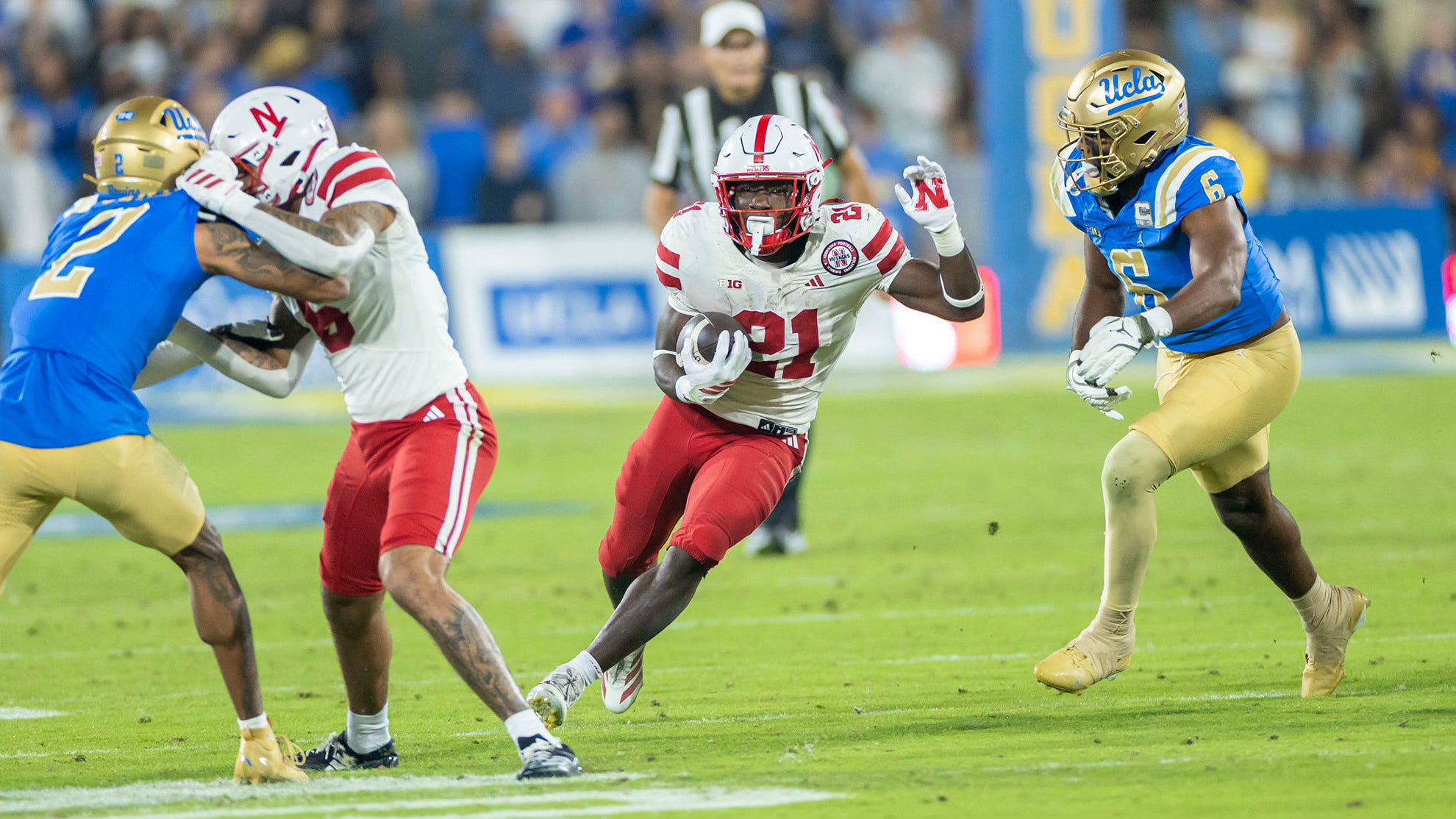
Running back Emmett Johnson was the only Husker selected,1 going in the fifth round (161st overall) to the Kansas City Chiefs. That was half the number of native Nebraskans selected. Former Nebraska walk-on tight end Nate Boerkircher-turned-Texas A&M Aggie was picked in the second round (56th) by Jacksonville. Not bad for kid who was lightly recruited out of Aurora High School. The Eagles selected North Dakota State quarterback Cole Payton in the fifth round (178th), ahead of such FBS producers as Diego Pavia, Jalon Daniels and Haynes King. Payton was the Nebraska Gatorade Player of the Year as a senior at Omaha Westside in 2020, choosing the Bison over a walk-on over from Nebraska.
I wrote in a newsletter last week that talent and wins aren’t always connected by a straight line, and adding the third dot of NFL draftability doesn’t simplify the picture. But it would be silly to argue the dots aren’t connected in some way. Better players, better chance to win. There will always be exceptions, but it doesn’t have to be more complicated than that.
This year’s draft was the ninth in the last 10 in which two or fewer Huskers were selected. Rather than try to overexplain “what this means,” as that seems fairly obvious, it prompted a different set of questions for me. What did it actually look like in the past? What is realistic to expect from today’s Nebraska in the draft? What should it look like in the future if the Huskers get to where they’re trying to go?
To try to address the problem of varying draft lengths, formats, etc., I decided to assign “Draft Points” for Huskers selected over the years. It’s super simple and absolutely imperfect, better for looking at a lot of years than for understanding the nuance of a few. I used the modern, three-day draft as rough cutoff points, so a player selected in the top 30 earned 3 points, a player picked 31-100 got 2 and anything after that received 1 point.2
Do that for every draft since the first one, 1936, and Nebraska’s history looks like this:
Look about like the Nebraska football you’ve consumed, however long that’s been? I included a line for the 10-year rolling average—just to offer a snapshot of how talented NU had been over the previous decade for any year—as well as Matt Rhule’s stints at Temple and Baylor. (More on that later.) I’d encourage you to roll around on that chart as there’s plenty of interesting discussions to be had.3 (And view it on desktop if you can, where it isn’t so squished.)
The Past
The NFL was still developing in the early part of the century, so I didn’t really start looking at these numbers intently until Bob Devaney arrived in 1962.4 The most interesting way to summarize that chart above is to break it out by coaches:
Bob Devaney (1962-72): Devaney’s first NU team produced zero draft picks and the 10-year average he inherited was at nearly a 20-year low. Pretty big jump in 1964, however, and in the years trailing Nebraska’s first two national titles. Was the uptick in pro-caliber talent coaching? Recruiting? The unanswerable question unless you’re content to just say, “both.” Career Draft Points Average: 8.2.
Tom Osborne (1973-97): Now it gets really interesting, and this is probably something that will require its own newsletter later this offseason, but Nebraska’s 10-year average peaks in 1982 at 12.6 and has fallen to 8.6 by the 1996 NFL Draft, the year after NU won back-to-back titles. Some of the trend in this era is probably the option offense, which made the college-to-pro transition hard for even very good quarterbacks and wide receivers. While the rolling trendline was pointing down for most of Osborne’s tenure, this was still Nebraska’s best era for putting players in the NFL. Career DPA: 10.3
Frank Solich (1998-2003): Recruiting was really the only viable justification for letting Solich go after the 2003 season, and maybe you see some of its impact here. Though if that was the reason to make the change, the chosen change wasn’t the right one. Career DPA: 6.3
Bill Callahan (2004-07): He could recruit and brought a more pro-friendly offense, so Callahan’s ability to put players in the pros was essentially the same as Solich’s. Callahan only had four recruiting cycles to stock the roster, but he and his staff’s work would have an impact in the years to come. Career DPA: 6.3
Bo Pelini (2008-14): The first one that was lower than I expected. Pelini had a nice spike in 2011, coming of his best two seasons in Lincoln, but a conference change and a not necessarily related drop in draftable players was coming. Pelini was…let’s say…not in love with recruiting, but to his credit he had at least 5 Draft Points after each of his seasons minus 2012, a season in which NU played for the Big Ten title. Career DPA: 4.9
Mike Riley (2015-17): He’d traveled everywhere in this football land—including Canada and the pros—but things sort of bottom out here after a solid first draft year (Pelini recruits) with Riley’s team producing just one late-round pick in the 2017 and 2018 drafts. Career DPA: 2.7
Scott Frost (2018-22): Neither the Big Ten nor the NFL really had to adjust to Frost’s Nebraska. The draft after his first season snapped NU’s decades-long streak of having a player drafted, and it wasn’t a blip. The Huskers put three in the 2022 draft following the most maddening 3-9 season possible, which is the best draft performance of the past 10 years, but it was hard to feel too optimistic about it.5 Career DPA: 2.2
Matt Rhule (2023-now): His Huskers have had three players drafted over three seasons—including an 0-fer in 2024—and all three were Frost-era recruits. Rhule and staff deserve at least some credit, however, for maximizing what they got out of Ty Robinson and Emmett Johnson.6 Career DPA: 1.5
So, that’s the whole sordid but not surprising tale of where things have been.
The Present
What’s a realistic expectation for Nebraska’s draft performance in today’s game? How many players picked would be enough to produce wins at a level most would accept?
It’s not what Ohio State does. Nebraska has never recruited that well over a length of time. It could be what Iowa does—maybe should be—but it hasn’t been of late.
Sticking with my own scoring system here, I look to the Pelini era. His teams never won fewer than nine games, were maddening and exhilarating (often on the same drive) and, yes, eventually Husker fans got tired of that, too. But today’s Husker fans are in a different place.
Pelini’s roughly 5 DPA average feels reasonable to me. More importantly it feels doable. We’re talking about a first- and second-rounder to get to 5. Or a third-rounder and three late-round picks.
Can a team more easily change games with two to four pro players? Yeah, if that’s about the average year after year.
The Future
Maybe the present wasn’t a rosy enough outlook, so let’s think big. I have a tough time going all the way big given NU hasn’t produced double-digit draft points since 1998, the draft following Osborne’s final season. Those days might be gone.
But if something more than the Pelini era is the target, what’s that take? I’d set the number at 7, a number NU has met or exceeded only four times this century—2001, 2005,7 2007 and 2011. You can do math on all the different ways to get to 7, but it’s basically a minimum of three players picked.
That’s where I’d put the target, but the reason I included Rhule’s Temple and Baylor tenures above is because it adds to the conversation. Those teams and his trajectory over those seven seasons were enough to propel him to the NFL, but those teams didn’t put a ton of players in the draft. Rhule’s first two Temple teams produced no draft picks before sending three each after the two good years. At Baylor, Rhule again struck out on draft picks after his first season but had a four-player draft after his third. In terms of draft points, a Rhule-led team has produced 5 or more twice.
Production like that, however, is still better than NU’s recent past, including Rhule’s own past in Lincoln to date. It would fall in line with the least and the most that is probably reasonable to expect at Nebraska right now.
Rhule won at Temple and Baylor without big numbers of pros, but he had some good ones. That’s maybe the good news. In the past, you could still win in college that way.
Maybe the bad news? Can you still win that way today in a transfer era, when the past two drafts already show that talent is consolidating with the power-conference schools but spreading out among the power schools themselves?
We’ll know when Nebraska either wins nine-plus games or has more than three players drafted again, though those will probably be the same season. That’s what you get with a trailing indicator such as the draft.
But it beats the alternative. You wouldn’t want to lose a bunch of games and then have a bunch of players drafted. If you can say nothing else about NU’s current draft run, you can at least say it hasn’t had that.
Six Huskers signed undrafted free agent deals: OL Henry Lutovsky and LB Javin Wright (Buccaneers), S DeShon Singleton (Chiefs), CB Ceyair Wright (Bengals) and LB Dasan McCullough and WR Dane Key (Broncos).
That’s roughly first round, second-and-third rounds and four-through-seven as we understand it today.
You can’t learn this from a chart, but it’s a bonus fact: My favorite Husker draft of all time is 1978. Nebraska had 11 players drafted, but that’s not important. What is: Huskers were the 308th and 402nd pick in the draft, covering both original area codes, thus making it the most Nebraskan. (Sorry, 531.)
Though this itself was an interesting stretch because you had the NFL and AFL drafts. I scored both if a player was selected in one but not the other. In most cases players were selected in both drafts, so I deferred to the NFL order.
Worth noting, Riley tops Frost in DPA based solely on his first draft class. Those were all players he inherited, so there is some evidence here for how bare the cabinet might’ve been when Frost returned home. To put it another way, Frost didn’t walk in to Ameer Abdullah, Randy Gregory and Kenny Bell.
Thomas Fidone II is a bit of a different story. If not for two knee injuries, maybe he would’ve been the player his potential suggested pre-Rhule.
This one might seem weird, but the Huskers had four players selected after Callahan’s first season and all four were selected in the first three rounds—Fabian Washington, Barrett Ruud, Josh Bullocks and Richie Incognito. His 2007 draft class had four players taken in the first four rounds.
Friday’s question about coaching or talent may be answered by combining today’s data about the draft and more data about recruiting rankings from 2022-2023. For example, Iowa just had seven players selected—how were those players ranked when they signed?
Rephrasing the question: development or recruiting? I’d bet Nebraska’s classes in 2022-23 were ranked higher than Iowa’s, but far fewer of those players were drafted. Either Nebraska is signing the wrong four-stars, or they are failing to help those players maximize their potential.
Rhule told Hurrdat last week that it takes money to compete with Ohio State and Texas for players. I think long-term success entails competing with Iowa first: coach like the Hawkeyes and Gophers, then recruit like the Ducks and Buckeyes.
The curbs look about like I expected. I'm curious how much it could change if the first class after a coach left counted for that coach at least before the portal. also, as a subscriber I expect you to put me in the prose.